

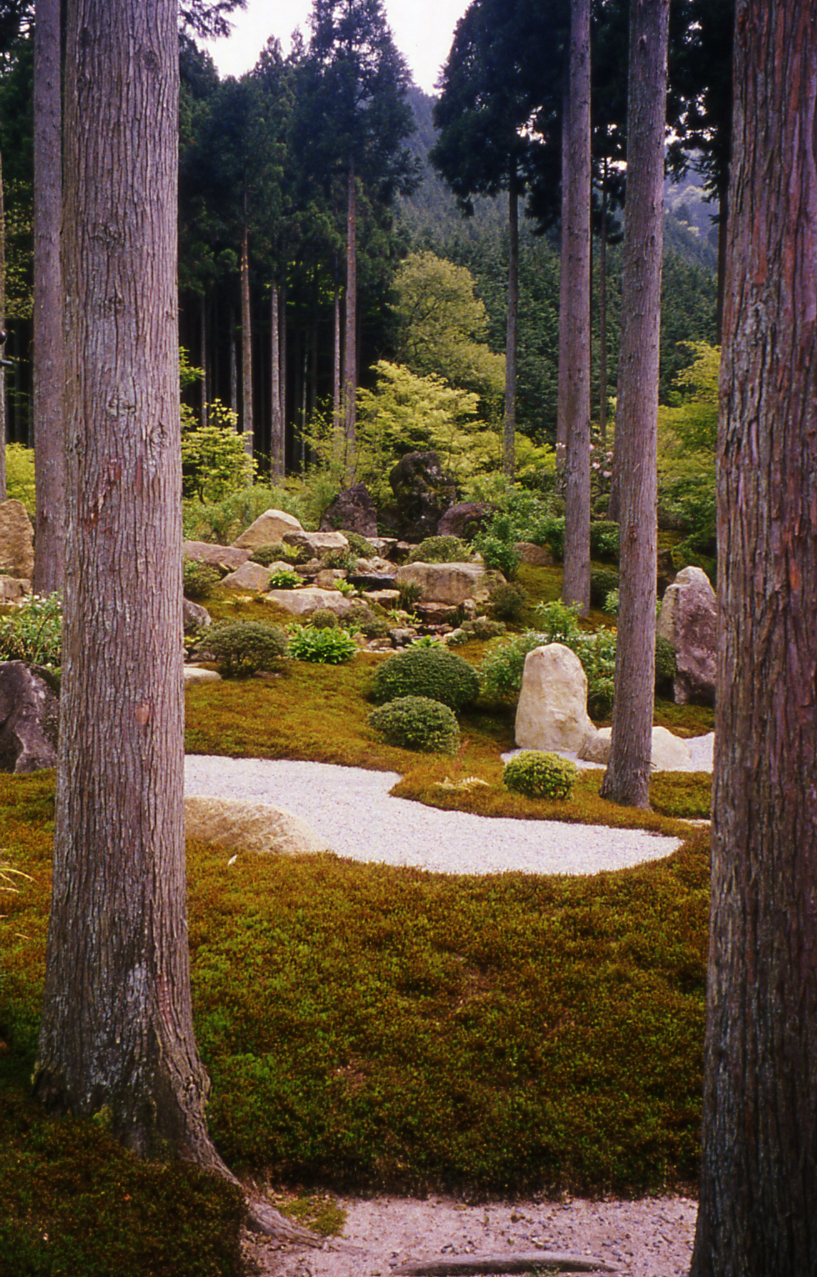
Nijyugo-bosatsu Jigen-no-Niwa
This garden was created at the request of the Head Priest Kobori Kōsen of Sanzen-in, who wished to establish a garden featuring white sand.
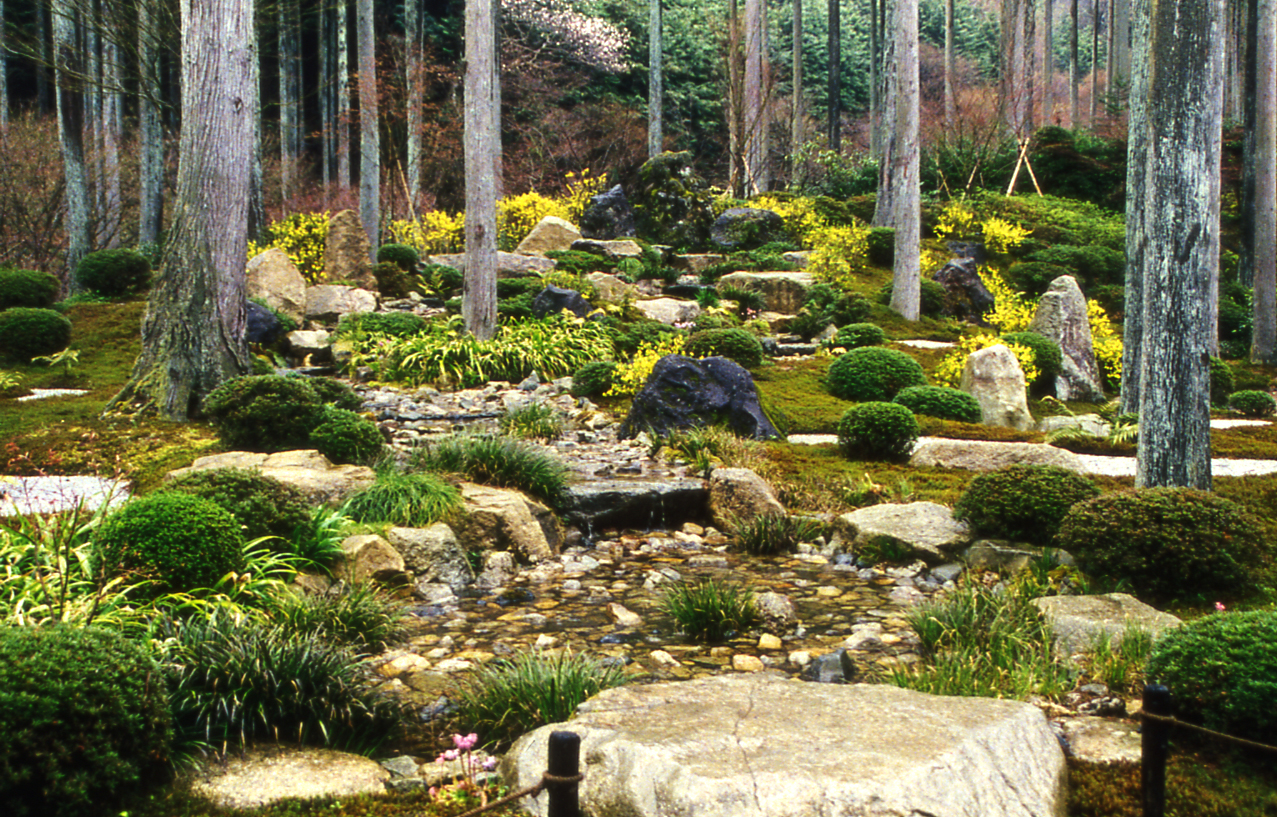
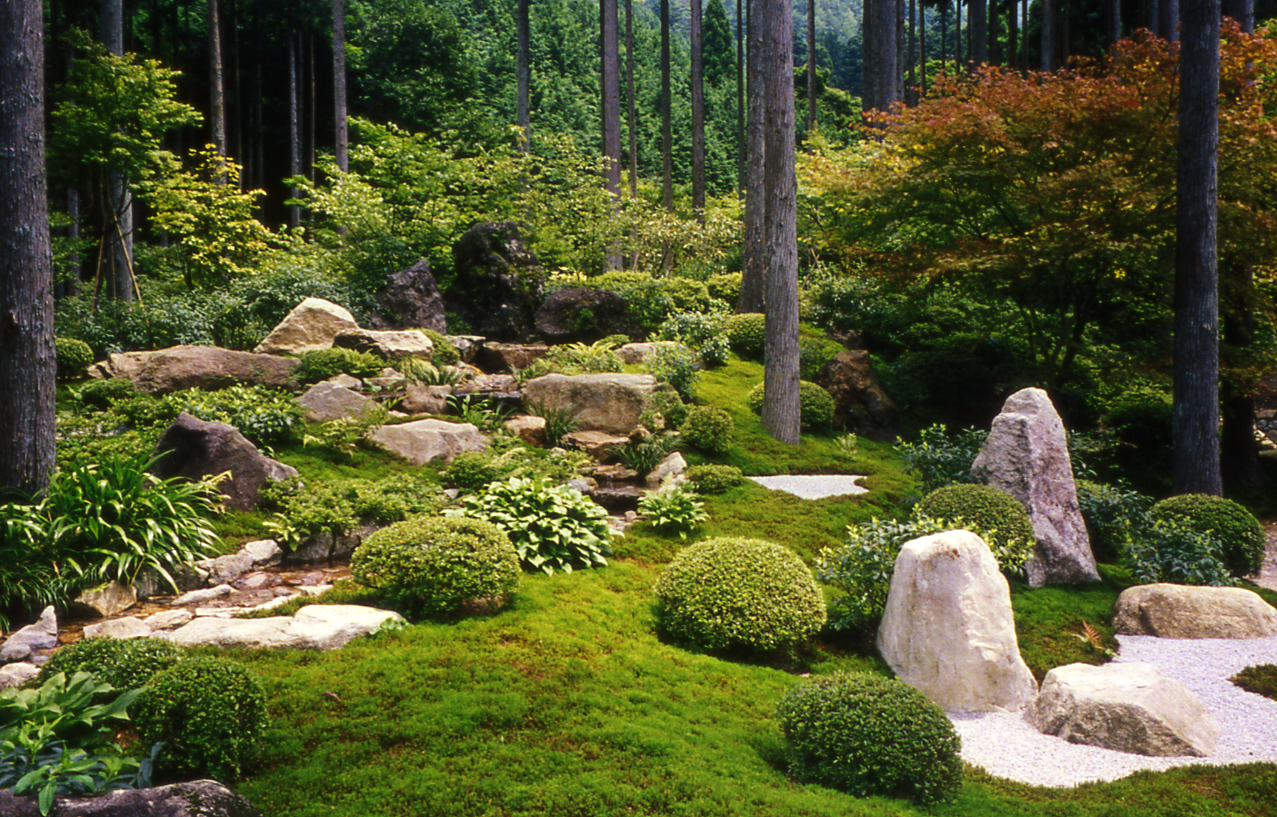
Using three Chōkai stones donated specifically for the new garden, a central stone arrangement symbolizing the Amida Triad was composed. Together with twenty-three additional stones, a total of twenty-six stones represent Amida Buddha and the Twenty-five Bodhisattvas who accompany Amida in the Buddhist tradition of the Descent to Welcome the Faithful.
Behind the three principal stones, Japanese cornel (Sanshuyu) was planted to evoke the halo surrounding the Buddha, while forsythia was planted behind the remaining Bodhisattva stones. Water drawn from the nearby Ritsu River flows through the garden before returning to the river, symbolizing the rays of light shining from the Pure Land. The white gravel placed throughout the garden represents the White Path depicted in traditional Pure Land paintings of Amida’s welcoming descent.
Although specialists initially concluded that introducing fireflies to the garden’s stream and pond would be difficult, fireflies now inhabit the garden naturally. It is hoped that, as the years pass, the garden will blend seamlessly with its surrounding environment and come to be appreciated by visitors as though it had always been part of the natural landscape.
The garden’s name, “Garden of the Twenty-five Bodhisattvas of Compassion” (Nijūgo Bosatsu Jigen no Niwa), was bestowed by Head Priest Kobori Kōsen.
-
Project Overview
Tendai Buddhist Temple
-
Region
Kyoto, Kyoto Prefecture, Japan
-
Design Date
1997.04
-
Client
Sanzen-in